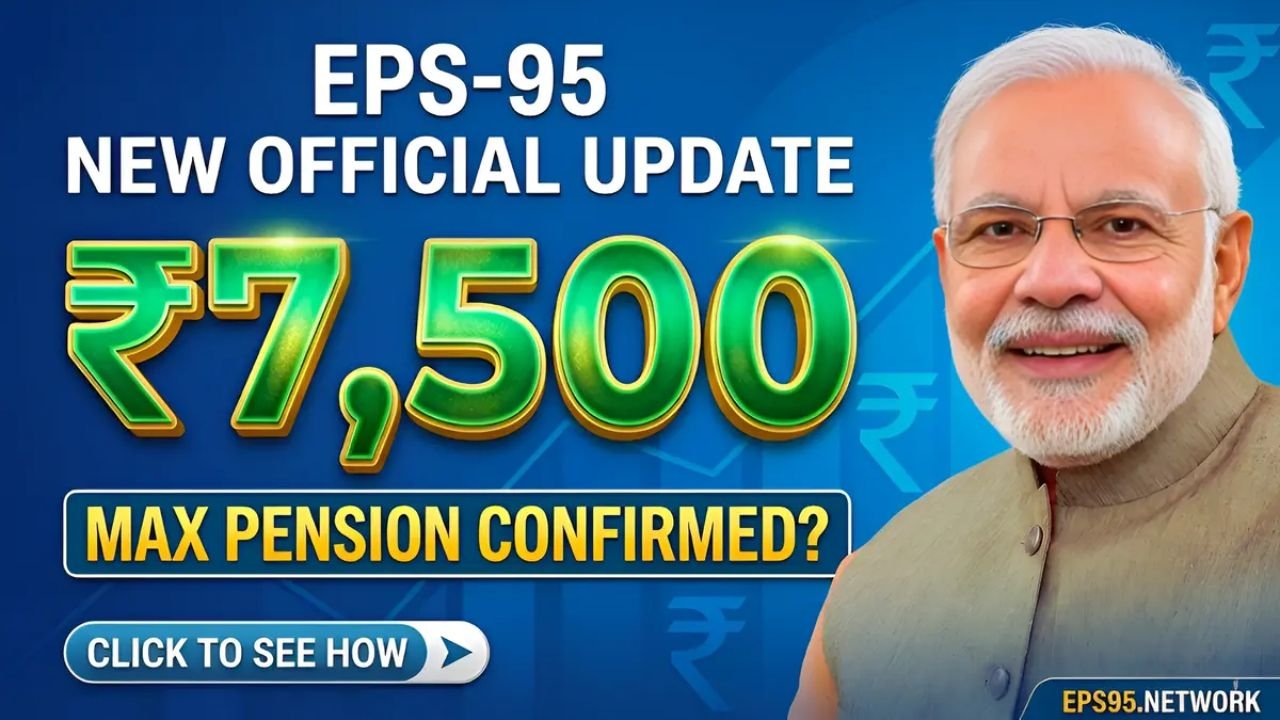
Retirees under the Employees’ Pension Scheme (EPS-95) across India are once again raising their voices for a major pension revision. Many pensioners say the current payouts are insufficient to meet basic living expenses, prompting demands for a minimum monthly pension of ₹7,500. With rising costs for groceries, healthcare, and utilities, this proposal has become a pressing issue for thousands of retired employees who depend solely on EPS-95 for financial security.
The call for a higher pension reflects growing concern over the widening gap between inflation and fixed retirement incomes. Pensioner associations are intensifying campaigns to ensure that retirees receive a dignified and stable source of income, highlighting the urgent need to modernize long-standing pension structures.
Why a ₹7,500 Pension Matters

For many EPS-95 beneficiaries, current pension amounts fall far short of covering daily expenses. Some retirees receive less than ₹1,000 per month, making it nearly impossible to manage essential costs without family support. Advocates argue that after decades of contributing to the workforce, pensioners deserve a consistent and respectable retirement income that reflects today’s economic realities.
Inflation and Its Impact on Retirees
Rising prices for groceries, medicines, electricity, and transportation have significantly affected retired workers. Many seniors rely entirely on their pension, leaving little room for unexpected expenses. The existing EPS-95 formula, developed years ago, has not kept pace with inflation, prompting widespread calls for revision. A minimum pension of ₹7,500 is being presented as a baseline to ensure financial independence and security for elderly citizens.
Nationwide Campaign for Pension Revision
Pensioner organizations across India are actively pushing the government to consider a pension hike. Public discussions, petitions, and state-level meetings have highlighted the financial struggles of retirees, signaling that this is not a localized concern but a nationwide issue. These campaigns are aimed at urging policymakers to review and reform the EPS-95 structure to better serve India’s retired workforce.
Government Response and Considerations

Authorities are aware of the concerns and have engaged in discussions at multiple administrative levels. However, implementing a higher minimum pension requires careful financial planning, given the large number of EPS-95 beneficiaries. Any policy change must balance fiscal responsibility with the urgent need to provide adequate retirement support.
Potential Relief for Retirees
Approval of a ₹7,500 minimum pension could offer meaningful relief to retired workers, allowing them to cover daily expenses, afford medical care, and reduce dependency on family members. For many, a higher pension would enhance quality of life, provide financial stability, and restore a sense of security during retirement.
Future of Pension Reform
Experts predict that debates around EPS-95 improvements will continue as the senior population grows. Policymakers may explore various reforms, including updated contribution structures, revised pension formulas, or additional welfare measures. These discussions highlight the need to maintain economic sustainability while improving social security for retirees.
EPS-95 Pension Overview
| Feature | Details | Delivery Method | Beneficiaries |
|---|---|---|---|
| Current Pension | Varies, some below ₹1,000 | Government pension system | EPS-95 retirees |
| Proposed Minimum Pension | ₹7,500 per month | Direct Benefit Transfer (DBT) | Economically vulnerable retirees |
| Age Eligibility | Typically 58–60+ years depending on scheme | Verified via ID and employment records | Retired employees |
| Purpose | Cover living expenses, healthcare, utilities | Monthly bank transfer | EPS-95 pensioners |
Conclusion
The demand for a ₹7,500 minimum EPS-95 pension underscores the financial challenges faced by India’s retired workforce. Ensuring a stable, dignified retirement income is increasingly vital as costs rise and pensioners face greater economic pressure. While government action is pending, the nationwide push highlights the urgent need for stronger social security measures for the country’s elderly population.